
When importing goods from China to Africa, one of the first and most important decisions you’ll face is choosing between air freight and sea freight. Both options have their advantages and limitations, and the right choice depends on several factors: the nature of your goods, your budget, your timeline, and the destination country. At JFI EXPRESS JOE CARGO, we help our clients make informed decisions every day — and in this article, we break down everything you need to know.
Air freight is the fastest transport mode available for international shipments. From Guangzhou to major African cities like Douala, Kinshasa, or Lagos, air freight typically takes between 3 and 7 days. This makes it the ideal solution for urgent shipments, high-value goods, or products with a short shelf life. However, speed comes at a price: air freight is significantly more expensive than sea freight, especially for heavy or bulky cargo. It is best suited for lightweight, high-margin goods where delivery time is a competitive advantage.
Sea freight, on the other hand, is the most cost-effective solution for large volumes. Whether you’re shipping full containers (FCL) or sharing container space with other importers (LCL), sea freight allows you to move much larger quantities at a fraction of the cost. Transit times are longer — typically 20 to 40 days depending on the port of origin and destination — but for businesses that plan ahead, this is rarely a problem. Sea freight is particularly popular for importing electronics, textiles, building materials, and general merchandise from China to Africa.
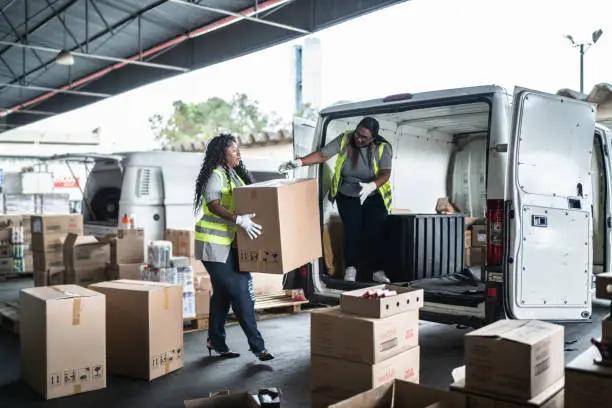
The decision also depends on your destination country and port infrastructure. Some African ports are better equipped than others for handling large container volumes efficiently. At JFI EXPRESS JOE CARGO, with offices in 16 African countries, we have deep local knowledge of port procedures, customs requirements, and transit conditions in each market — ensuring your shipment arrives smoothly regardless of the transport mode you choose.
Ultimately, many of our clients use a combination of both modes depending on the type of goods and urgency. Fast-moving, high-value items travel by air; bulkier, slower-moving stock travels by sea. Our team at JFI EXPRESS JOE CARGO is always available to analyze your specific needs and recommend the most cost-effective and reliable shipping strategy for your business.